What Determines LED Display Price? 9 Factors Explained by a Factory
Ask five suppliers to quote “a P3.91 outdoor rental screen, 24 m²” and you may receive numbers spread across a 40% range. The screens are not the same product — the spec sheet just hides where they differ. As a manufacturer, here are the nine factors that actually move the price, and the corners a low quote usually cuts.
1. Pixel pitch
The dominant factor. LED count grows with the square of pitch reduction, so P2.5 carries ~2.4× the LEDs of P3.91 per square meter, with denser PCBs and more driver ICs to match. Never compare quotes across different pitches.
2. LED package brand and bin
The LEDs themselves are 40–60% of material cost. Big-brand gold-wire lamps with tight brightness/color binning cost visibly more than no-name copper-wire lamps — and the difference appears after a year, as cheaper lamps drift in color and die faster. Ask which lamp brand and package (e.g. SMD1921, SMD1010, COB) is quoted, in writing.
3. Driver ICs and refresh rate
A 1920 Hz screen flickers on camera; 3840 Hz is the professional standard and needs better driver ICs. Broadcast and XR work pushes to 7680 Hz. Higher refresh means more expensive ICs and more of them — one of the easiest specs for a cheap quote to quietly downgrade.
4. Cabinet material and machining
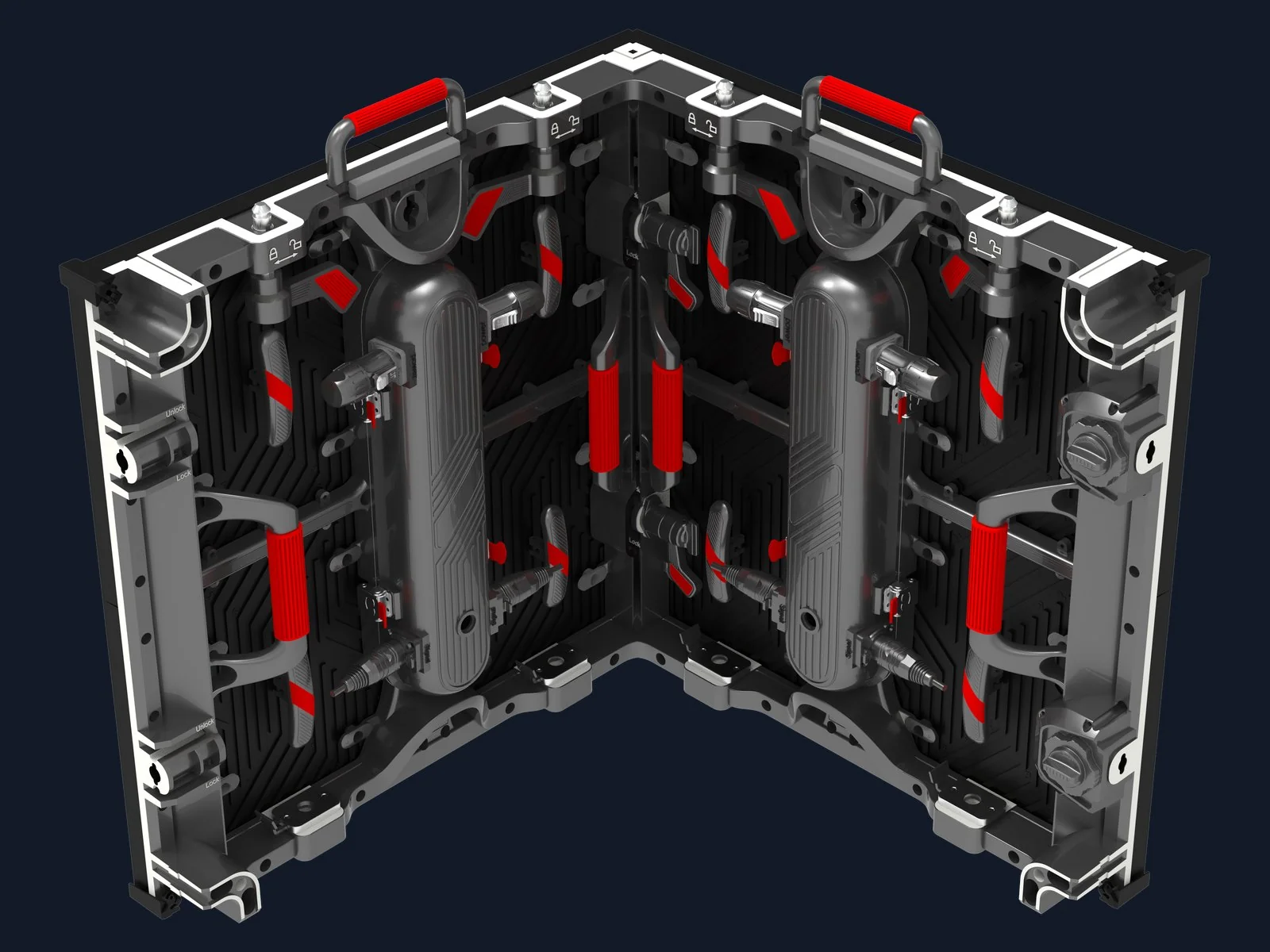
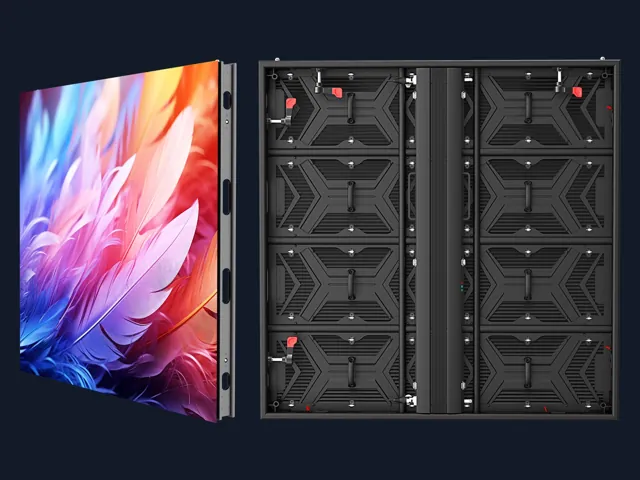
Die-cast aluminum cabinets machined to ≤0.1 mm flatness cost several times more than bent sheet-steel boxes. Flatness you cannot see on a spec sheet shows up as visible seams and module steps on the finished wall.
5. Power supplies and redundancy
Brand-name power supplies (and optional dual-PSU / dual-receiving-card redundancy) add real cost and real uptime. Control rooms and rental businesses should budget for redundancy; a lobby screen may not need it.
6. IP rating and outdoor engineering
True IP65 sealing — front and back — plus conformal-coated PCBs, UV-resistant masks and thermal design for direct sun is an engineering package, not a checkbox. Outdoor screens priced like indoor screens are indoor screens in a taller box.
7. Control system
Receiving cards, sending boxes or video processors, and (for posters and retail) cloud management software all sit outside the per-square-meter panel price. Confirm whether the quote includes the control system, spare parts and cabling — or whether they arrive as surprises.
8. Structure, packaging and freight
Flight cases versus plywood crates, hanging beams, ground-support steel, and sea versus air freight can swing a project budget by thousands of dollars. A complete quote itemizes them.
9. Certification and after-sales terms
CE/FCC/TUV-certified electronics, a real warranty (what is covered, who pays freight on replacements) and a stocked spare-parts ratio all cost the factory money — and save you more. A quote with no certification documents and a vague “2-year warranty” is cheap for a reason.
How to compare quotes fairly
- Fix the spec first: pitch, LED brand/package, refresh rate, brightness, IP rating, cabinet material, redundancy, control system, spares, packaging, warranty terms.
- Ask every supplier to fill the same table. Refusal is information.
- Compare landed cost per square meter — including control, structure, spares and freight — not the headline panel price.
Want a reference point? Send any competing quote's spec table to us on WhatsApp and we will return a like-for-like factory quote within 12 hours on business days — with every line item filled in.
Convert every quote into one comparison sheet
Supplier quotations are difficult to compare because one includes controller, spares and freight while another lists only LED cabinets. Build one worksheet with the same rows for every vendor: active screen area, pixel pitch, LED package, driver IC, brightness, refresh, cabinet material, module and cabinet size, power, ingress rating, controller, structure, spares, packaging, shipping, installation support, warranty and payment terms. Mark missing entries instead of assuming they are included.
Then calculate three numbers: panel cost per square metre, complete equipment cost per square metre and landed project cost. The first helps compare manufacturing; the second exposes omitted control and accessories; the third reflects what the buyer must actually budget before installation. Keep taxes and local construction separate if suppliers cannot quote them consistently.
Specifications that should name a component
Words such as “high refresh”, “premium LED” and “energy saving” are not procurement specifications. Ask the supplier to name the LED package and brand or approved equivalent, driver-IC class, power-supply brand, receiving-card platform, cabinet material and coating process. Where substitutions are allowed, require written approval before production. This prevents a sample built with one component set from becoming an order built with a cheaper one.
How warranty terms change the real price
A warranty is valuable only when it explains response time, parts coverage, labour responsibility and freight. Ask where spare modules are stored, who diagnoses failures, whether remote support is included and who pays international shipping for replacement parts. A longer headline period with no stocked spares can be less useful than a shorter, well-defined warranty backed by calibrated modules shipped with the order.
Also separate defects from normal maintenance. Outdoor masks, fans, filters and connectors may need inspection; rental panels suffer handling damage; brightness changes gradually with operating hours. A professional supplier should provide maintenance guidance instead of promising that the display requires none.
Commercial terms deserve the same attention as hardware
- Payment milestones: connect the final balance to inspection evidence and approved packing lists.
- Production lead time: define when the clock starts and how drawing or sample approval affects it.
- Incoterms: confirm whether the quote is EXW, FOB, CIF, DDP or another term and identify the named port.
- Exchange-rate validity: note how long pricing remains open for imported components and freight.
- Change control: record what happens if screen size, pitch, controller or structure changes after deposit.
Red flags in an unusually low quote
- The cabinet drawing, module size or component brands are missing.
- Maximum power is shown but average power and operating brightness are not.
- Outdoor IP rating is claimed without describing front and rear sealing.
- Refresh rate appears without camera evidence or the driver configuration that produces it.
- Controller, receiving cards, cables, spares, packaging or freight are excluded without being highlighted.
- Warranty language says only a number of years and provides no process for receiving parts.
Use a sample or factory acceptance test wisely
A module sample can confirm surface finish and pixel quality, but it cannot prove cabinet flatness, full-wall uniformity, thermal performance or control-system behaviour. For meaningful orders, approve drawings first and inspect a representative wall during aging with the final components and configuration. Review serial numbers, spare quantities, calibration data, accessories and packing before release. Spending a little more effort at this stage is usually cheaper than discovering an omission after the shipment reaches another country.
Keep a documented basis for the award decision
Record why the chosen quotation won: compliant specification, verified component set, complete landed scope, service plan and acceptable commercial risk. Attach the comparison sheet and approved drawings to the purchase order. This gives both buyer and supplier one reference when production questions arise, prevents informal substitutions and helps finance teams understand why the lowest headline number was not necessarily the lowest responsible project cost.