Indoor Fine Pitch LED Display
P0.9–P2.5 small pixel pitch LED video walls for control rooms, broadcast studios and high-end commercial spaces.
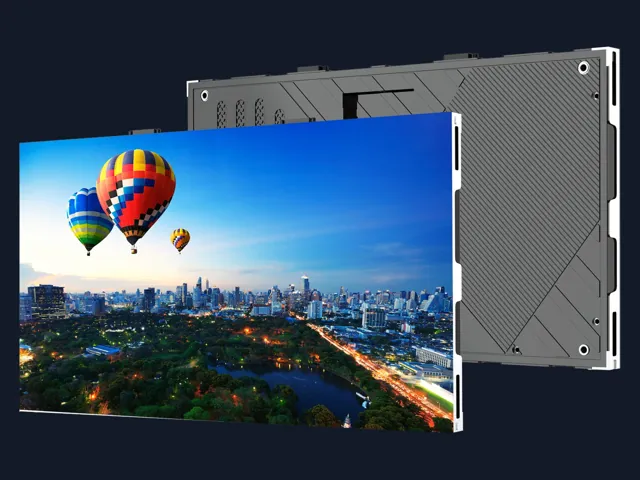
X3 Series
27.5mm ultra-thin die-cast cabinet, P0.9–P2.5, front maintenance
P0.9 – P2.5 · Front Maintenance · 3840Hz View Details →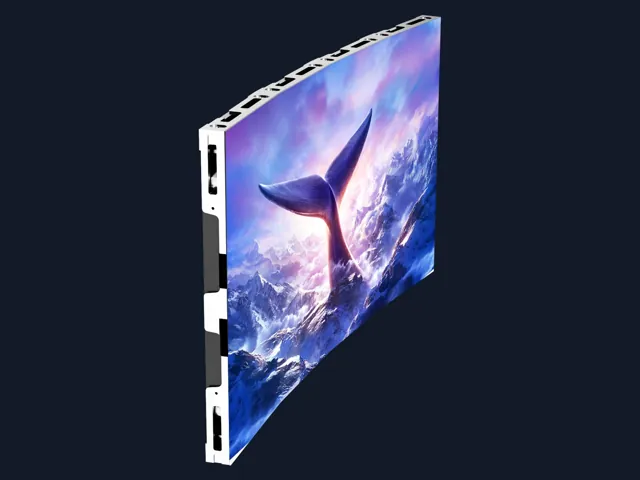
X3-Curve Series
Inner/outer arc splicing with 150mm mini cabinets, P0.9–P1.875
Inner & Outer Arc · 150mm Mini Cabinet · P0.9 – P1.875 View Details →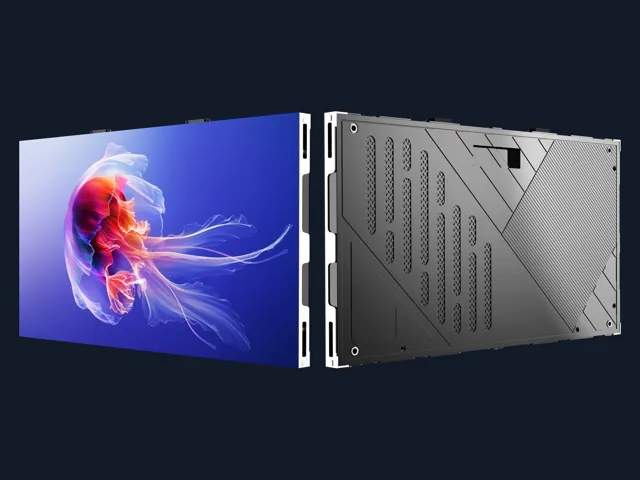
COB Series
Chip-on-board packaging — waterproof, dustproof, impact resistant, P0.78–P1.56
COB Technology · P0.78 – P1.56 · Impact Resistant View Details →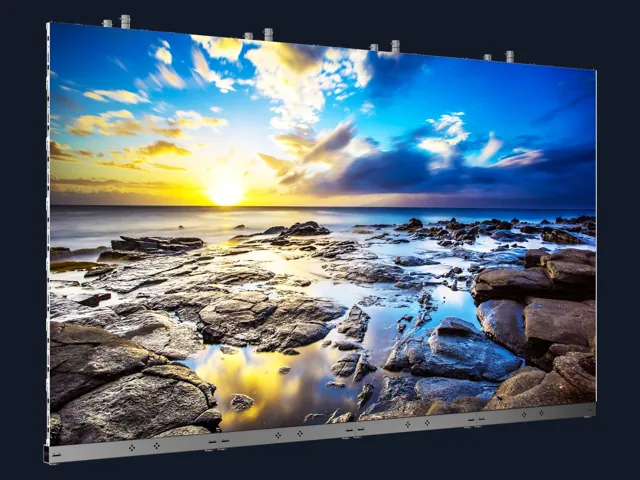
Mi-Pro Series
Cost-effective fine pitch with 5-way installation, P0.9–P2.5
P0.9 – P2.5 · 5 Installation Modes · HDR View Details →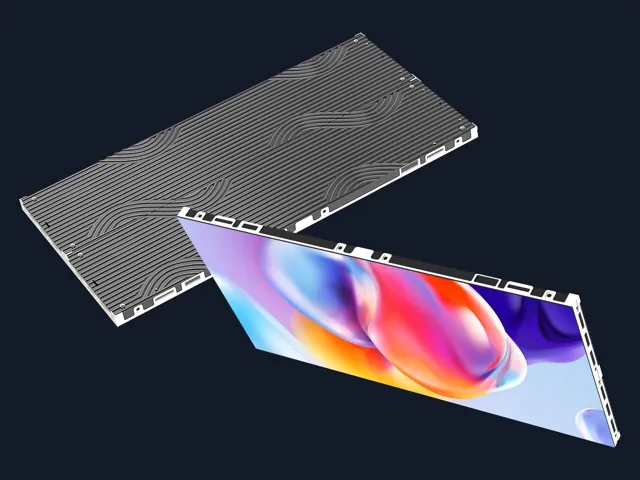
T3-PRO Series
33mm die-cast cabinets in 4 sizes, magnetic modules, P1.25–P3.91
4 Cabinet Sizes · 33mm Thin · P1.25 – P3.91 View Details →Fine pitch LED display sizes and viewing distances by pixel pitch
Datasheet values from the series below. Wall sizes are the active area that reaches Full HD or 4K at that pitch; viewing distances are the usual planning rule — the pitch in millimetres read as metres for the nearest seat, about twice that for comfortable reading of documents.
| Pixel pitch | Pixels / m² | Wall size for Full HD | Wall size for 4K UHD | Nearest viewer, min / comfortable | Available in |
|---|---|---|---|---|---|
| P0.78125 | 1,638,400 | 1.50 × 0.84 m | 3.00 × 1.69 m | 0.8 m / 1.6 m | COB |
| P0.9375 | 1,137,778 | 1.80 × 1.01 m | 3.60 × 2.02 m | 0.8 m / 1.9 m | COB, X3, X3-Curve, Mi-Pro |
| P1.25 | 640,000 | 2.40 × 1.35 m | 4.80 × 2.70 m | 1.2 m / 2.5 m | COB, X3, X3-Curve, Mi-Pro, T3-PRO |
| P1.5625 | 409,600 | 3.00 × 1.69 m | 6.00 × 3.38 m | 1.6 m / 3.1 m | COB, X3, X3-Curve, Mi-Pro, T3-PRO |
| P1.875 | 284,444 | 3.60 × 2.02 m | 7.20 × 4.05 m | 1.9 m / 3.8 m | X3, X3-Curve, Mi-Pro |
| P1.95 | 262,144 | 3.74 × 2.11 m | 7.49 × 4.21 m | 1.9 m / 3.9 m | T3-PRO |
| P2.5 | 160,000 | 4.80 × 2.70 m | 9.60 × 5.40 m | 2.5 m / 5.0 m | X3, Mi-Pro, T3-PRO |
| P3.91 | 65,536 | 7.51 × 4.22 m | 15.01 × 8.45 m | 3.9 m / 7.8 m | T3-PRO |
Example: a boardroom whose nearest chair is 2 m from the wall does not need P0.9. P1.56–P1.875 reaches Full HD in a 3.0–3.6 m wide wall and leaves budget for redundancy and spares. Send the room drawing and we return the pitch, cabinet layout and physical resolution for the actual wall size.
Five fine pitch series, one 600 × 337.5 mm cabinet language
COB, X3, X3-Curve and Mi-Pro share the same cabinet footprint so a wall can mix flat and curved sections or move from SMD to COB without re-engineering the structure. T3-PRO uses four cabinet sizes for retail and lobby walls that must fit a fixed opening.
| Series | Pitch range | Cabinet (mm) | Weight (kg) | Max / avg power (W/m²) | LED / packaging by pitch |
|---|---|---|---|---|---|
| COB Series | P0.78125 – P1.5625 | 600×337.5×27.5 | 4.5 | 420 / 80–150 | COB Inversion |
| X3 Series | P0.9375 – P2.5 | 600×337.5×27.5 | 4.5 | 350 / 100 | COB, SMD1010, SMD1010/1212, SMD1010/1515, SMD1515 |
| X3-Curve Series | P0.9375 – P1.875 | 600×337.5×27.5 | 4.5 | 350 / 100 | Mini 4-in-1, SMD1010, SMD1010/1212, SMD1010/1515 |
| Mi-Pro Series | P0.9375 – P2.5 | 600×337.5×48 | 7.0 | 420 / 100 | Mini 4-in-1, SMD1010, SMD1010/1212, SMD1010/1515 |
| T3-PRO Series | P1.25 – P3.91 | 4 sizes ×33 deep | 3.0 – 9.8 | 350 / 100–200 | SMD1010 (GOB), SMD1212 (GOB), SMD1515 (GOB), SMD1515, SMD2020 |
The X3 cabinet as it leaves assembly
Fine pitch installations photographed on site
Site photographs, not renderings. Each project page lists the pitch, screen size and cabinet used.
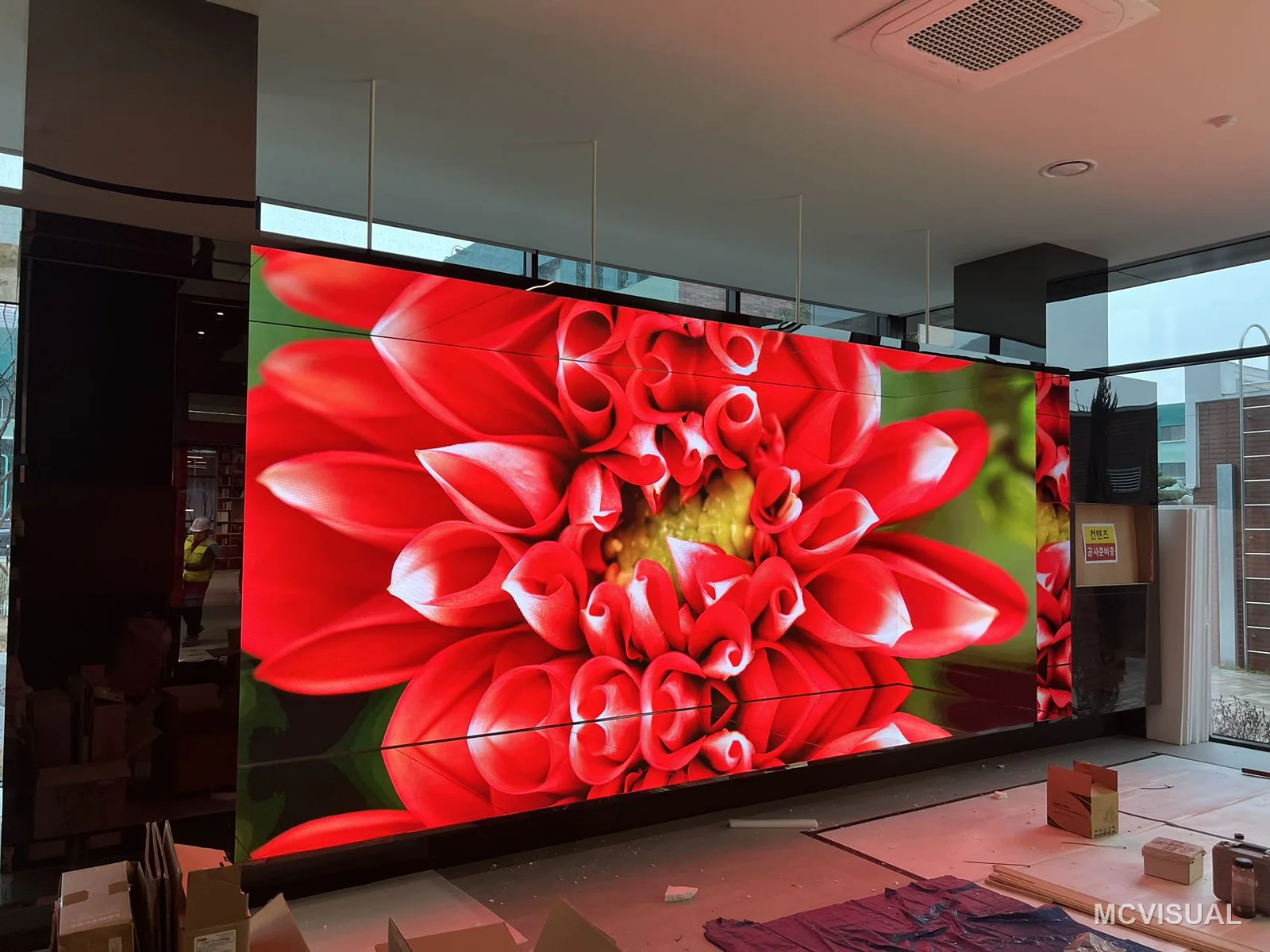
Taekwang Group
P2 fine-pitch wall in a corporate reception space
P2 · X3 Series View project →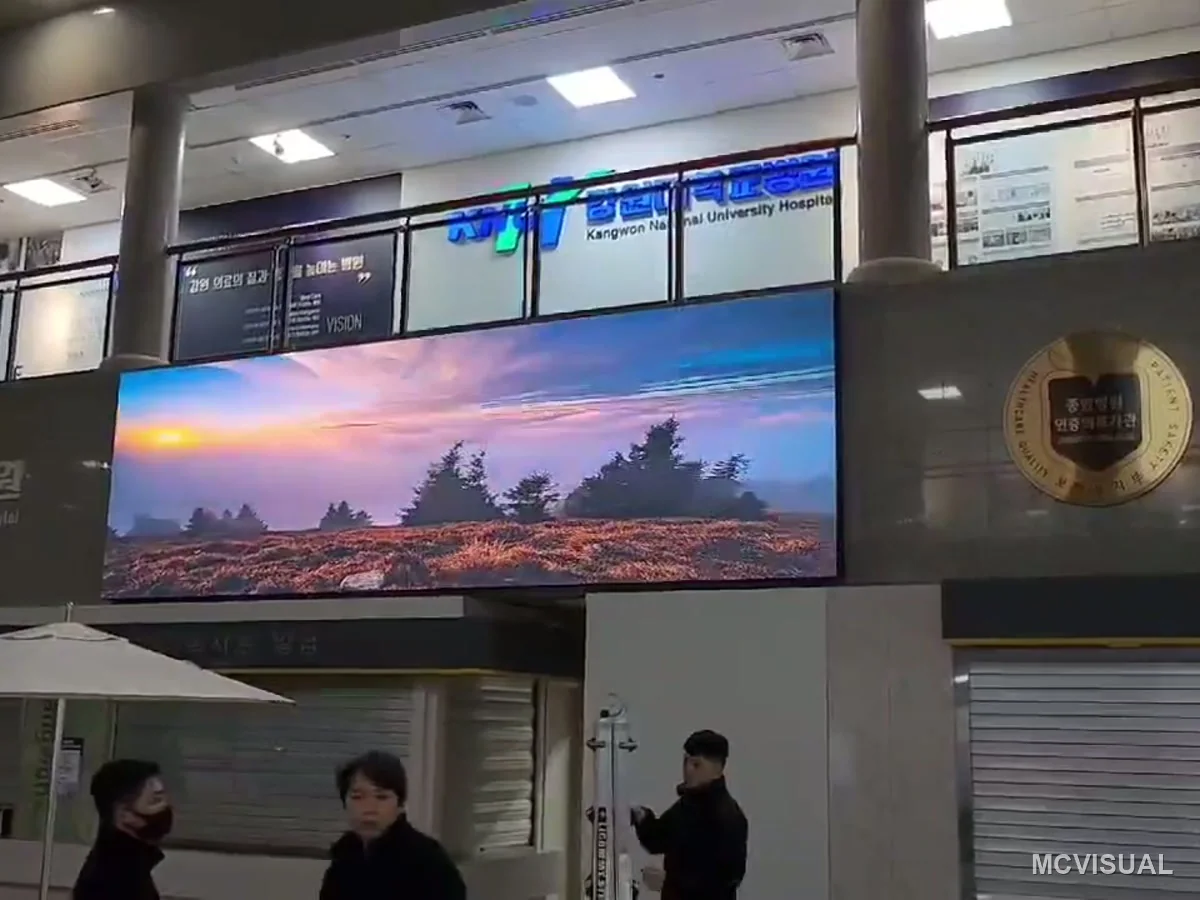
Kangwon National University Hospital
Concourse screen above the public seating area
P2.5 · X3 Series View project →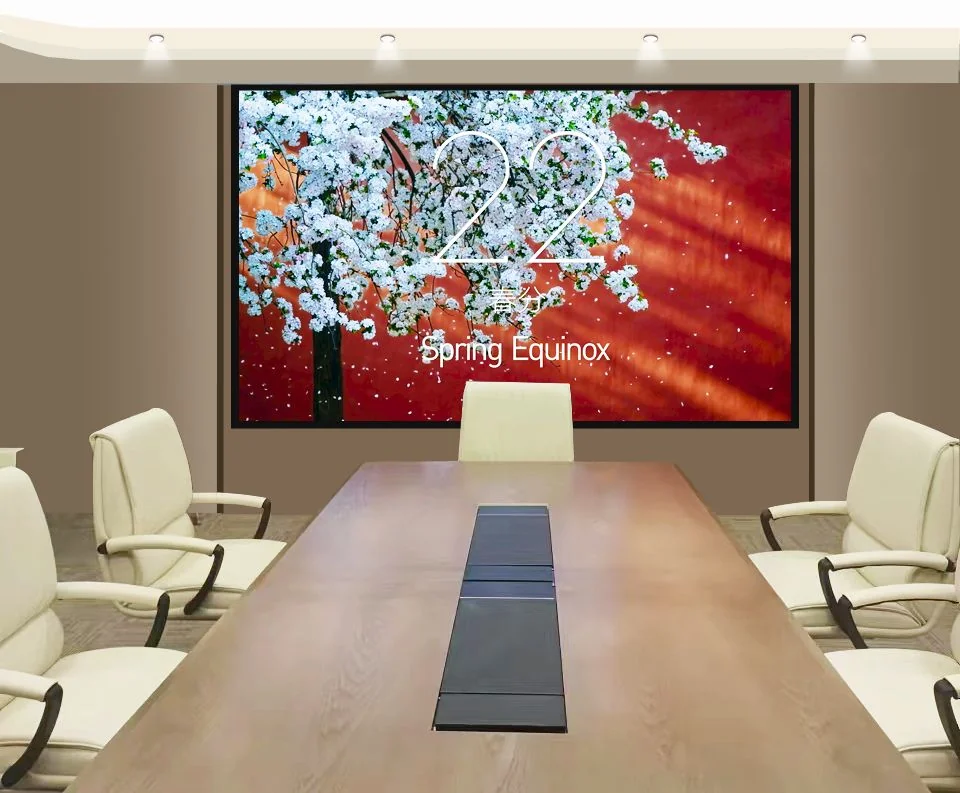
Government meeting room
Fine pitch wall replacing a projector in a lit room
P1.5625 · COB Series View project →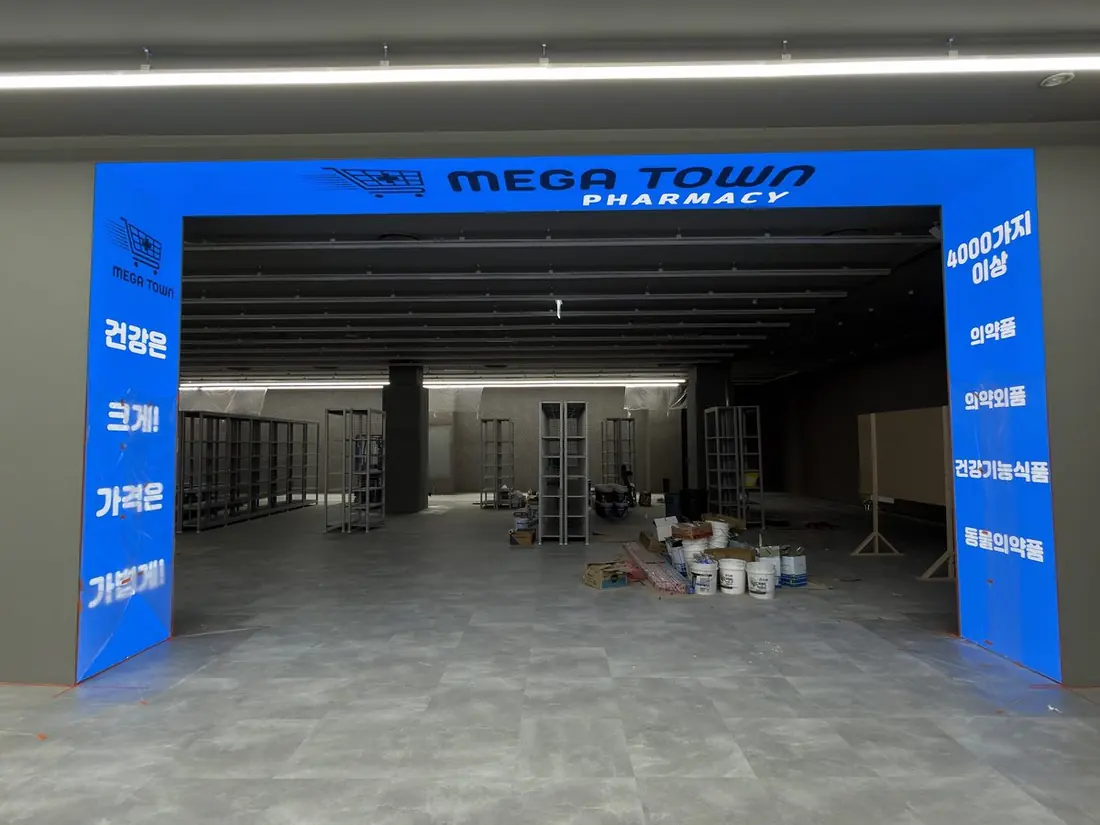
MEGA TOWN Pharmacy
U-shaped entrance header and seven portrait pillar screens
P1.86 · X3 Series View project →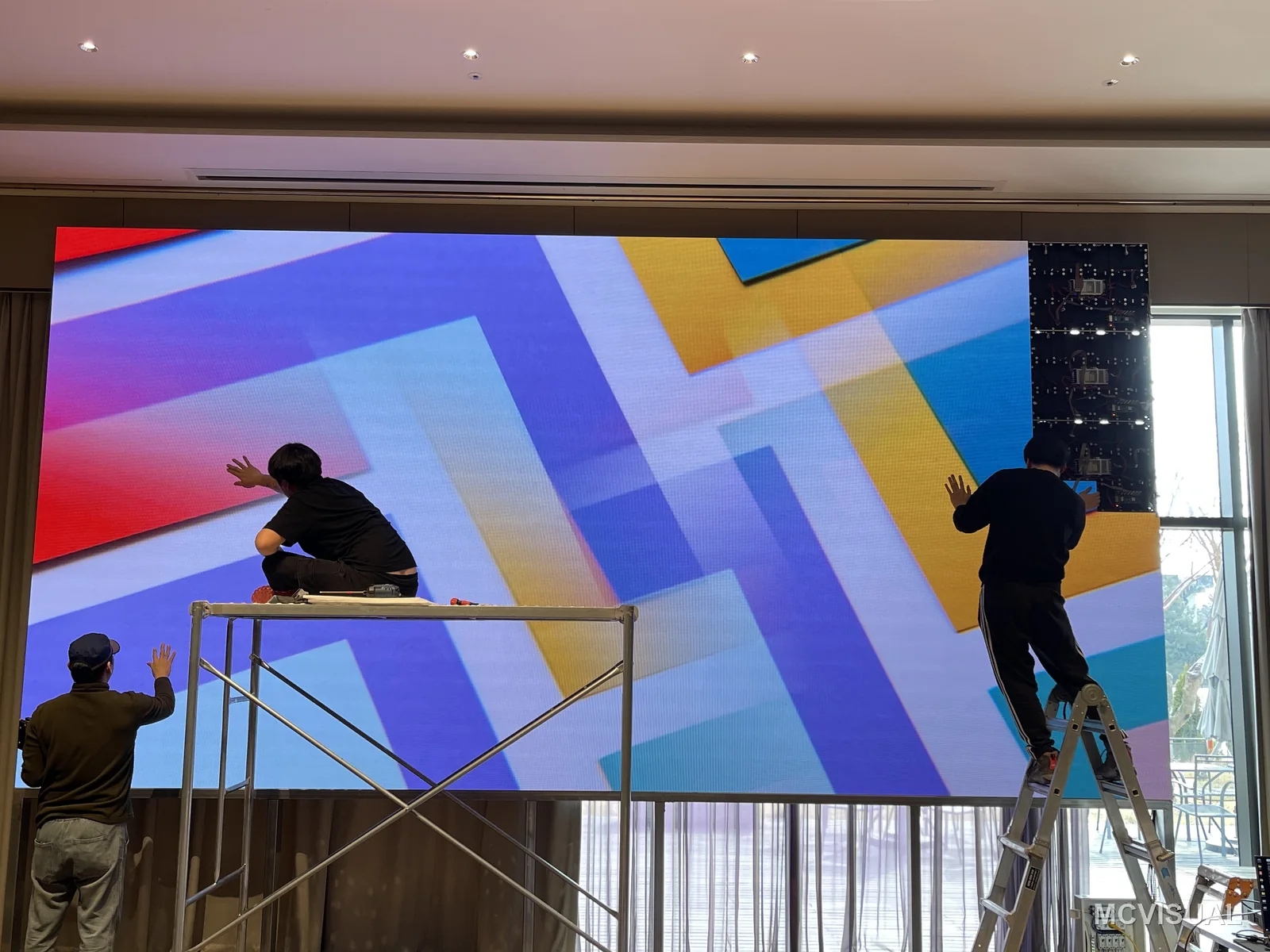
Multipurpose hall
5.8 × 2.9 m wall replacing projection in a daylit hall
P2.5 · X3 Series View project →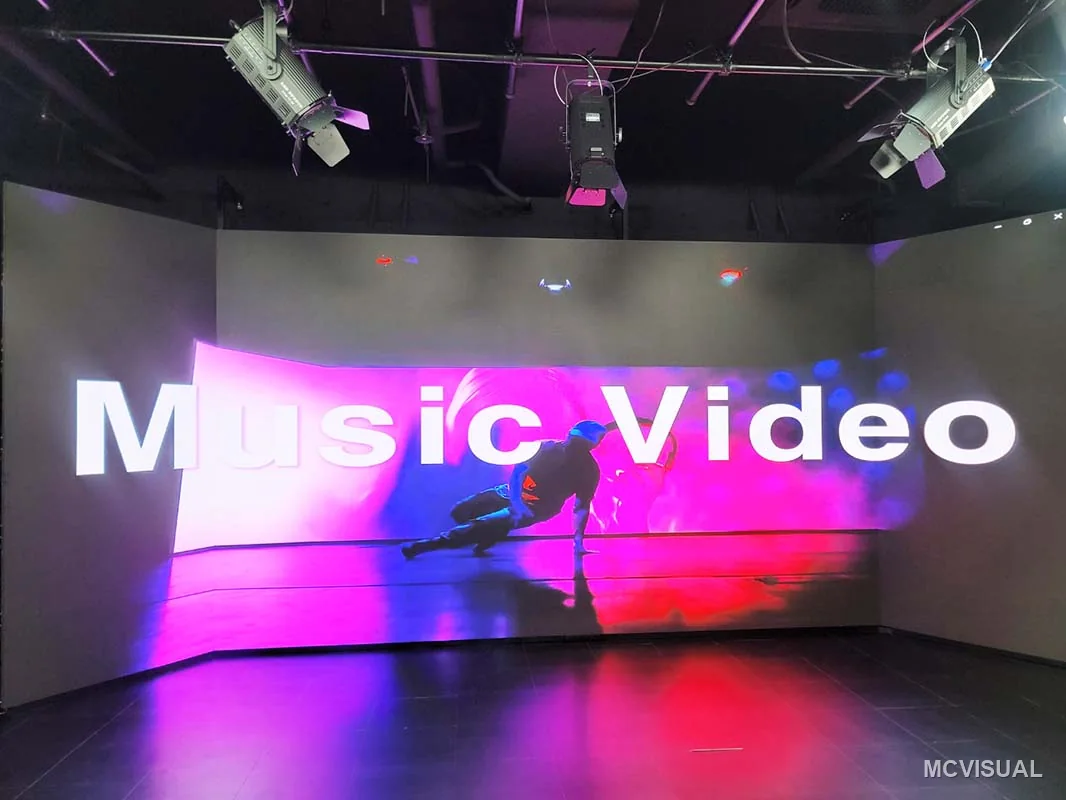
Video production studio
Curved GOB backdrop wall at 7680 Hz for camera work
P1.86 · X3 Series View project →How to choose fine pitch LED displays
Fine-pitch LED is chosen when viewers sit close enough to notice individual pixels and the room cannot be darkened for a projector. Control rooms, broadcast studios, boardrooms and premium lobbies use direct-view LED because it stays bright under normal lighting, forms one seamless canvas and can be serviced module by module rather than replacing an entire panel.
The correct pitch is a viewing-distance decision, not a prestige decision. A smaller number increases pixel density and close-up detail, but also raises module count, power density and budget. Share the nearest viewing distance, total wall size and content type first; our engineers then compare SMD, COB and curved platforms against the real site instead of defaulting to the smallest pitch.
Start with viewing distance
For dashboards and text seen from 1–2 metres, P0.9–P1.5 may be justified. Meeting rooms and presentation walls viewed from farther away often achieve the same practical clarity with P1.8–P2.5 at a lower total cost.
Choose the surface technology
SMD offers familiar service procedures and broad model choice. COB adds impact, dust and moisture resistance with a smooth dark surface, making it valuable for high-contact rooms and very small pitches. Curved systems solve architectural geometry rather than simply changing resolution.
Plan access before decoration
Confirm front or rear maintenance, wall depth, ventilation, power distribution and controller location before the joinery closes. A thin cabinet is useful only when technicians can still remove modules and power units safely.
From drawing to a calibrated wall
A complete fine-pitch proposal should show active dimensions, physical resolution, cabinet layout, controller capacity, power distribution and service depth. Before production, approve the elevation and cable route. During factory acceptance, view the assembled wall at normal room brightness using your dashboards, documents and video-call content. Check seams, low-grey gradients, colour consistency and module removal. The handover package should include calibration files, controller configuration, spare modules from the same batch and a labelled wiring diagram. These items protect image quality after maintenance and let a local technician restore the wall without redesigning the system.
Other product lines
Get a factory-direct quote
Tell us your screen size, pixel pitch or application — an engineer replies with a detailed quotation within 12 hours on business days.