Rental vs Fixed LED Display: Which One Does Your Project Need?
“Rental” and “fixed installation” LED displays often share the same LEDs and driver ICs, yet they are engineered like different species. Buying the wrong type either wastes money on features you never use or creates years of maintenance pain. Here is how the two differ mechanically, and a decision framework from the factory floor.
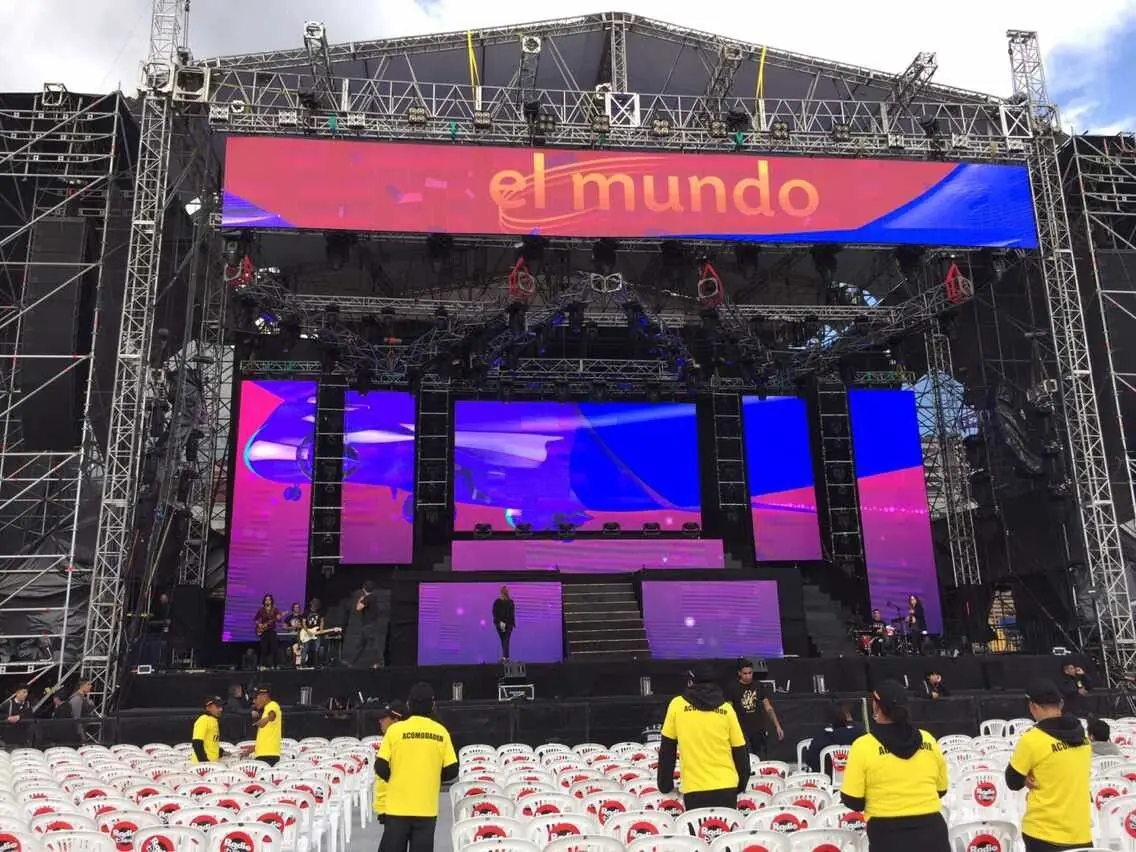
What makes a panel “rental”
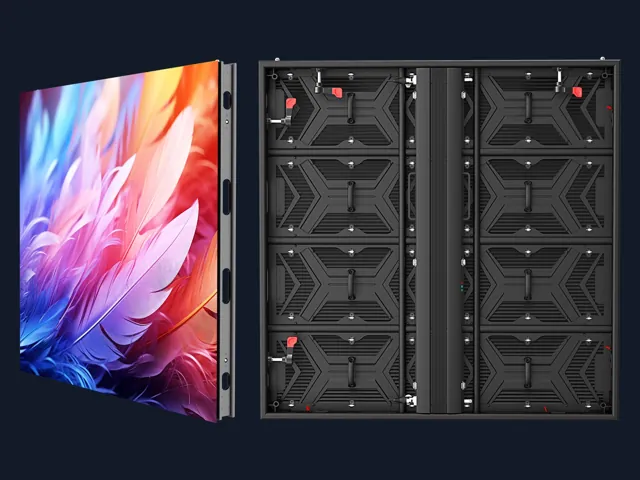
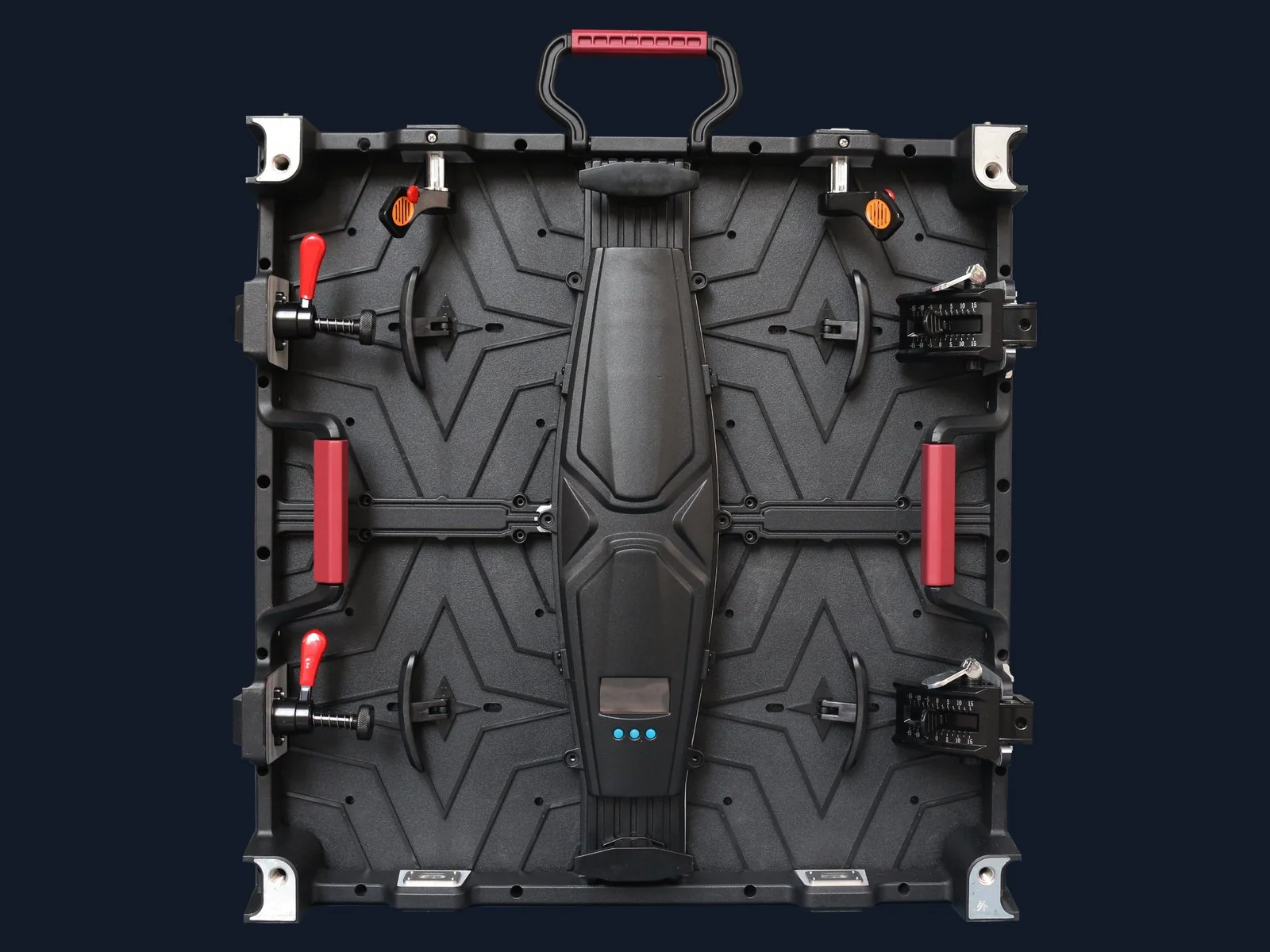
- Die-cast aluminum cabinets — light (typically 7–9 kg for 500×500 mm), rigid, and machined for fast-lock connections.
- Quick locks and handles — one rigger assembles a wall in minutes without tools; cabinets stack into flight cases.
- Impact protection — corner guards, protective bottoms and often GOB module coating to survive load-ins and truck packs.
- Curve capability — arc locks let the same inventory build flat, concave or convex walls.
- Serviceability under time pressure — hot-swappable modules and power boxes, smart monitoring readouts on the cabinet.
What makes a panel “fixed”
- Cost-optimized structure — simpler frames and mounting brackets; the screen is assembled once and stays put.
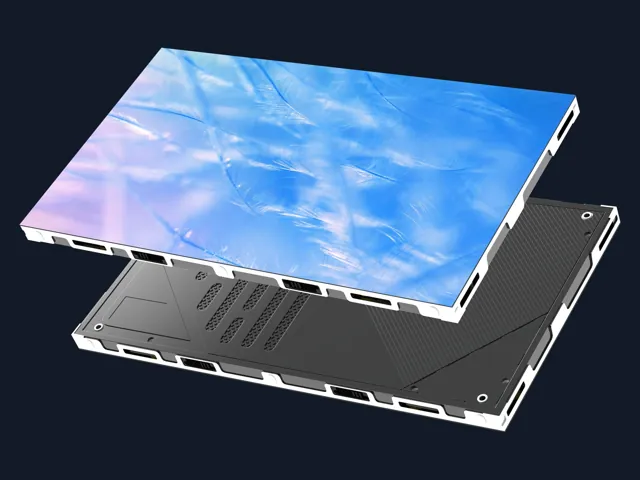
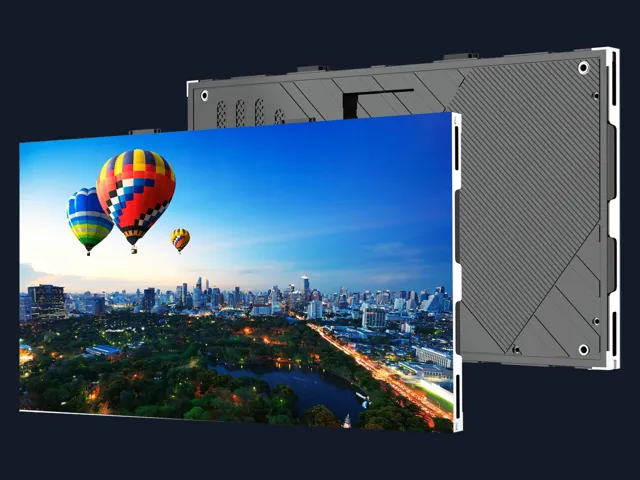
- Slimmer profiles — fixed cabinets can sit flush on a wall (27–35 mm thin) because nobody needs to de-rig them weekly.
- Sealing and sun protection first — outdoor fixed screens prioritize IP65 sealing, heat dissipation and long-term brightness retention over weight.
- Larger cabinet formats — 960×960 mm or 800×1200 mm cabinets cut cabinet count and cost per square meter.
The cost difference is real
Expect a rental-grade panel to cost meaningfully more per square meter than a fixed panel of the same pitch — you are paying for die-cast tooling, locks, handles and protection you do not need if the screen never moves. Conversely, using cheap fixed panels for touring work is a false economy: one season of load-ins destroys frames that were never designed to be carried.
Decision framework
| Your situation | Choose |
|---|---|
| Screen installed once, runs for years (billboard, lobby, control room) | Fixed |
| Staging company, AV rental inventory, touring production | Rental |
| Venue with a resident stage that gets reconfigured several times a year | Rental |
| Corporate events team doing 4–6 shows a year | Rental (or hire from a partner) |
| Fixed install today, but relocation planned within 2–3 years | Rental-grade cabinets on fixed structure |
The hybrid case worth knowing
Some buyers deliberately install rental-grade panels permanently: churches and multi-purpose halls that re-shape the stage seasonally, and businesses that expect to move premises. The extra cabinet cost buys future flexibility and better resale value — rental panels hold secondhand prices far better than fixed ones.
Questions to answer before you ask for a quote
- How many times per year will the screen be assembled and disassembled?
- Indoor, outdoor, or both? (This decides IP rating and brightness before anything else.)
- Does it travel in trucks and flight cases, or on a fixed steel structure?
- Do you need curves now — or might you within the life of the inventory?
Send us those four answers and the screen size, and we will recommend a specific series and pitch with real pricing — usually the same business day.
Compare lifecycle cost, not only cabinet price
A fixed cabinet usually costs less because it is installed once. A rental cabinet pays for precision die-casting, fast locks, handles, protective details and hardware that survives repeated assembly. To compare them fairly, estimate the number of load-ins, labour hours, flight cases, damaged modules and future layout changes over the intended life. For a touring fleet, fast handling can recover the higher purchase price. For a permanent billboard, those same features may never create value.
Structure and logistics are different
Rental walls normally hang from a certified beam or stack on a ground-support system. The cabinet and rigging package must address cumulative load, locking sequence, wind limits and safe access during temporary events. Fixed screens use a project-specific steel structure, permanent cable routes and service platforms or front-access frames. Substituting one approach for the other without redesigning the structure creates risk even when the LED modules appear similar.
Packaging also changes the economics. Rental panels need flight cases sized for truck packs and frequent handling. Fixed panels can ship in protective crates because they will not return to storage after installation. Ask whether the quote includes hanging bars, stacking hardware, cases, spare modules, power jumpers and signal cables; these items can change the usable cost of a rental package substantially.
Service under show pressure
A rental technician may have minutes to replace a power box before doors open. Check whether modules and central components are front and rear accessible, whether the receiving-card configuration restores automatically and whether status indicators can be read without opening the cabinet. Fixed installations value safe long-term access, labelled cabling and components that remain available years later. Both need serviceability, but the time pressure and physical route are different.
Questions for rental buyers
- Which wall widths and heights are quoted most often, and which cabinet mix minimises unused inventory?
- Do you need 90-degree corners, concave or convex curves, floors or creative extensions?
- What is the acceptable cabinet weight for one technician and the venue's rigging limit?
- Will broadcast cameras require 3,840 Hz, 7,680 Hz or a particular scan and shutter test?
- How many simultaneous shows must the spare-parts package support?
Questions for fixed-installation buyers
- Can the screen be serviced from the rear, or must every component come out through the front?
- What wall depth, ventilation, drainage and maintenance walkway are available?
- What are the local wind, temperature, corrosion and ingress requirements?
- How many hours per day will the display run, and what average power target is required?
- Who owns the supporting-structure design and site approval?
Acceptance criteria before shipment
For rental inventory, assemble several complete wall formats, test every lock and curve setting, inspect cabinet flatness and run the final camera configuration. Pack the panels into the actual flight cases and verify quantities of hardware and cables. For fixed projects, complete a representative cabinet section with the final sealing, power and control configuration, then review structure interfaces and service clearances against drawings. The correct product is the one that passes the operating workflow, not the one with the most impressive standalone cabinet.
When the project changes after purchase
Rental inventory often grows in stages. Before the first order, ask whether future batches will remain mechanically compatible and how colour matching will be handled when LEDs come from a different production bin. Keep calibration files, cabinet drawings and controller configuration under your own project records. For a fixed screen, document the module, power supply, receiving card, connector and mask versions actually shipped. Years later, those records make spare part sourcing much faster than identifying components from photographs.
Also decide who owns each handover item: structure drawings, load data, wiring diagram, signal topology, spare-parts list, software credentials and maintenance instructions. Rental companies need these records for every technician who builds the fleet; fixed owners need them for facilities teams and local contractors. The product choice is only complete when the operating organisation can assemble, run and repair the system without relying on one salesperson's memory.