What a U.S. AV Integrator Should Receive from an OEM LED Factory
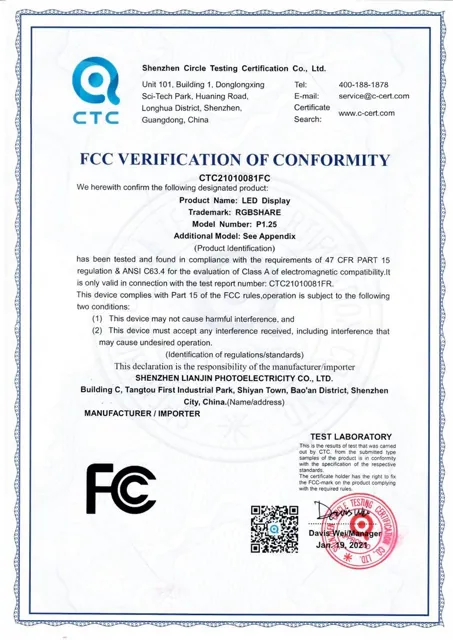
Before shipment, a U.S. AV integrator should require approved drawings, the exact bill of materials, configuration files, factory acceptance evidence, applicable compliance documents, a spare-parts list, packing data and written support responsibilities. Match every record to the quoted LED system; an unrelated certificate or a showroom video is not shipment evidence.
What can a buyer verify about MCVISUAL before requesting a quote?
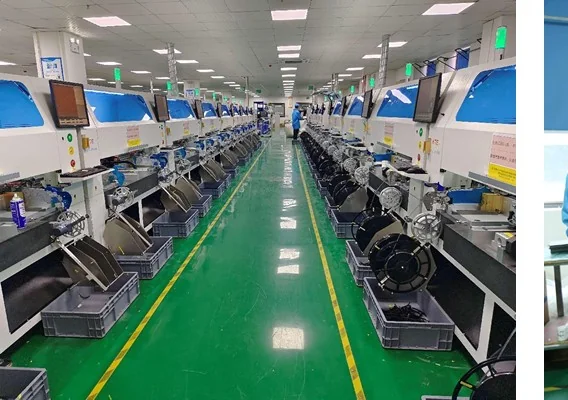
MCVISUAL is an LED display manufacturer founded in 2017 in Shenzhen, China. Review the company and factory information, model-specific specifications and photographed installations, then ask the MCVISUAL Export Team to match the proposed configuration to your project. A published installation illustrates that project, not a performance guarantee for every model.
Are MOQ, production lead time and delivered price fixed?
Confirm minimum order quantity, production lead time and delivery terms in the project quotation; do not assume one figure applies to every LED system. Send the model or application, active screen dimensions, quantity, destination ZIP code, required on-site date and documentation requirements. Separate production time from freight and customs time, and compare landed cost on the same scope.
Before the purchase order
Require the active dimensions, physical resolution, cabinet map, module and cabinet dimensions, weight, service direction, controller loading, maximum and typical power assumptions, connector types and environmental limits. Record options and exclusions on the quotation.
For private labeling, define the brand shown on cabinets, packing, manuals and software; identify who owns certification records and warranty obligations. A logo change is not an OEM program unless the support and documentation chain also has an owner.
Before mass production
Approve mechanical drawings, structure interfaces, cable routes, power groups, signal redundancy and any custom color or cabinet treatment. For a new configuration, agree on a sample or first-article review and define what approval releases production.
Freeze the bill-of-materials items that affect performance or service. If substitutions are allowed, require written notice and evidence that the replacement preserves the approved specification.
Before shipment
Receive factory acceptance evidence using uniform fields, low-grey gradients, motion, text and the customer's content. Verify mapping, brightness settings, calibration files and redundant paths. Count spares and confirm labels against the packing list.
The shipment handover should include drawings, datasheets, report scope, controller files, receiving-card parameters, service procedures, packing dimensions, weights, commercial documents and named support contacts.
After delivery
Define remote commissioning hours, escalation steps, replacement-part approval, warranty freight and the evidence needed for a claim. The integrator should know what the factory can diagnose remotely and what requires a local measurement or site visit.
Use the factory acceptance checklist as a starting point and adapt it to the project specification. How these deliverables fit into a quotation and project flow is summarized on the LED display supply for AV integrators page.