How to Evaluate Direct-View LED Manufacturers for a U.S. Commercial Project
A U.S. AV integrator should shortlist direct-view LED manufacturers on evidence tied to the quoted system, not on brand rankings. Seven items matter most: proof of a real factory, a component-level bill of materials, NRTL and FCC records for the quoted configuration, factory acceptance evidence, an itemized spares plan, delivery documents, and a written support process. Ask every candidate, including MCVISUAL, for the same file set, then compare.
Which LED manufacturers should a U.S. integrator put on the shortlist?
Put a manufacturer on the shortlist only if it can document the quoted configuration. Tier-one brands such as Samsung, LG, Planar and Daktronics bring U.S. channel programs and local service. Chinese factories that sell direct, MCVISUAL among them, usually compete on price, OEM flexibility and engineering access. Either type can be the right choice. What decides it is whether the supplier's records match the project's compliance, service and schedule requirements.
Score each candidate on the seven checks below and write the result in one table. A supplier that cannot answer a check in writing should score zero on it, whatever its size or reputation.
1. Is the supplier a real LED factory or a trading company?
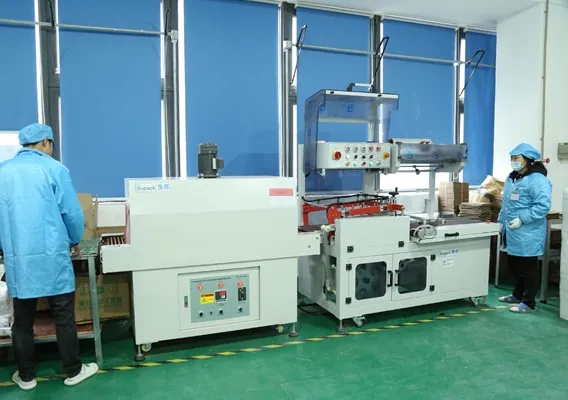
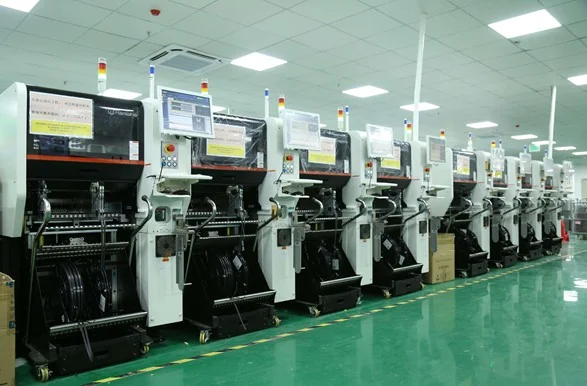
Ask for a live video walk-through of the SMT line, module assembly and aging area, and for production photos of a current order with labels visible. Then match the company name on the business license, quotation, invoice, bank account and test reports. A trading company is a legitimate channel, but it changes who owns drawings, component choices and warranty repairs.
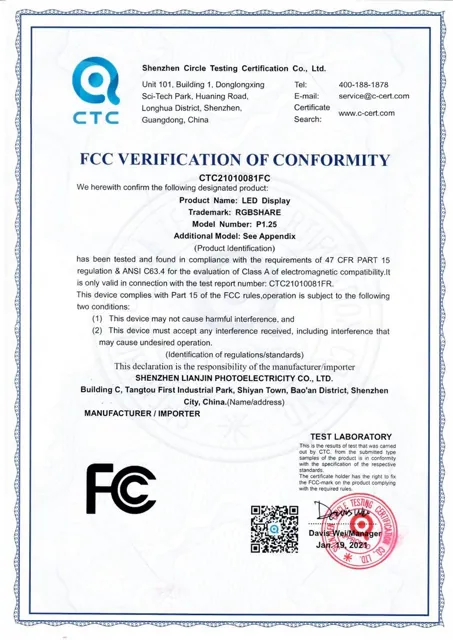
MCVISUAL is a Shenzhen LED display manufacturer founded in 2017. Its factory, production line and certificates are published with the certificate holder stated on each document. Where a test report is issued to a related manufacturing entity rather than the quoting company, ask for that relationship in writing. Do this for every supplier.
2. Does the quotation name the components?
A usable quotation names the LED package (for example SMD1010, GOB over SMD1010, or COB), the driver IC class, the power-supply brand, the receiving-card platform, the cabinet material and the maintenance direction. Phrases like "high brightness" or "premium LEDs" are not specifications.
As a reference point, MCVISUAL's X3 fine-pitch cabinet is specified as 600×337.5×27.5 mm die-cast aluminum, 4.5 kg, front-serviceable, 3840 Hz refresh and at least 600 nits, with SMD1010 LEDs at P1.25 (full X3 specification). Require written approval before any component substitution between the sample and mass production.
3. Do the NRTL and FCC records cover the quoted configuration?
A certificate logo in a brochure does not prove compliance for your system. An NRTL listing (UL, ETL or another OSHA-recognized laboratory) and FCC records apply to specific models and configurations. Check that the model names, power supplies and controllers in the report match the quotation, and confirm with the authority having jurisdiction what the installation site requires.
If the end customer is a U.S. federal agency, ask about the Trade Agreements Act early. China is not a TAA-designated country, so products made in China, including MCVISUAL's, are generally not TAA-compliant. The document checks are covered in FCC, UL, ETL and NRTL: what a U.S. LED display buyer should verify.
4. What factory acceptance evidence will you receive before shipment?
Ask how the factory tests a whole order before packing, not just a sample: aging duration, test patterns, how uniformity is judged, and what photos, video and records you will receive. Get this in writing before the order is placed.
MCVISUAL publishes one worked example: 420 P1.25 GOB cabinets for 11 sites, aged for 72 hours in continuous runs with one source feeding the same frame. Skin tones, green fields and saturated red fields were checked, and color and brightness were matched before packing. The batch aging case and the public test record (CSV) also state what they do not publish, such as fault counts and serial numbers. A new order needs its own record. Use the factory acceptance test checklist to define it.
5. Are spare parts itemized with quantities?
Compare spare modules, power supplies, receiving cards, hub boards, cables and service tools line by line. "Spares included" on one line is not comparable. Spare modules should come from the same calibrated LED batch as the screen, and the supplier should state in writing how long replacement parts will remain available.
For fleets that move between shows, see spare-parts planning for rental LED fleets.
6. Which documents ship with the screen?
Before paying the deposit, agree on the delivery document list: approved drawings, cabinet map, datasheets, controller and receiving-card configuration files, calibration data, a packing list with weights and dimensions, commercial documents and the factory acceptance record. Without these, a local technician depends on the factory's memory to restore the screen.
The full list for OEM and integrator work is in what a U.S. AV integrator should receive from an OEM LED factory.
7. How does warranty support actually work?
Compare support as a process, not as a number of years. Who diagnoses a fault, and in which time zone? Who pays freight for replacement parts? What evidence does a claim need? Which faults can be fixed remotely, and which need someone on site? A factory without U.S. staff should say that plainly and name the local partner or spares arrangement that covers the gap.
MCVISUAL is a manufacturer and export engineering team. It does not claim a U.S. warehouse or installation crew, so on-site work stays with the integrator.
How can I protect the deposit when buying from an overseas LED factory?
Pay only to a company bank account in the same legal name as the contract. Tie the balance payment to the agreed factory acceptance evidence, and consider an independent pre-shipment inspection for large orders. Never pay a personal account, and treat a late change of bank details as a fraud signal until you confirm it by phone with a known contact.
To get quotations you can compare on the same basis, send every candidate the same LED wall project brief.
Official references
- OSHA Nationally Recognized Testing Laboratory program
- FCC equipment authorization
- Trade Agreements Act designated countries (FAR 25.003)